|
Table of Contents
|
Visas & Immigration • Parent Guide
Canada Study Permit 2026: How Parents Can Help Their Child Succeed Under the New Rules
Updated: December 2025
Reading time: 14-16 min By BorderlessLoans Team
đź“‹ What Parents Need to Know Upfront Canada has significantly restructured its International Student Program for 2026. While overall permit numbers have been reduced, Master’s and PhD students at public institutions are now exempt from caps and no longer need a Provincial Attestation Letter—making graduate programs more accessible than before. This guide explains what these changes mean for your family’s investment.
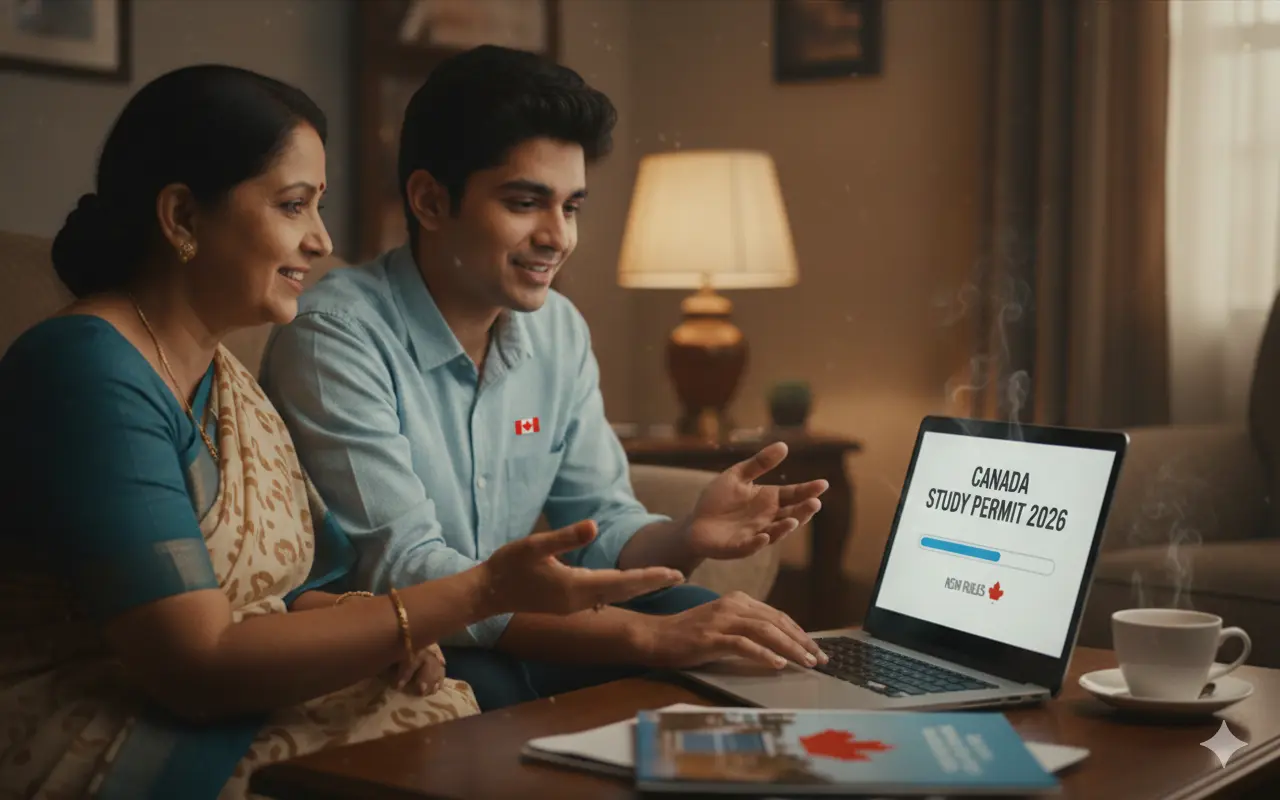
You’ve watched your child work toward this goal for years—the entrance exams, the applications, the acceptance letter. Now comes the next challenge: navigating Canada’s study permit process during a time of significant policy change. Your role as a parent has never been more important. The headlines about Canada reducing international student numbers can be alarming. But understanding the details reveals a more nuanced picture. For families planning graduate studies at reputable public institutions, 2026 actually brings advantages. For undergraduate and college applicants, success requires more strategic planning than before. This guide is written specifically for parents supporting their child’s Canadian education journey. We’ll cover what the new rules actually mean, how to evaluate whether the investment makes sense, and concrete ways you can help your child succeed—from application support to financial planning to understanding post-graduation outcomes. Your informed involvement can make the difference between a smooth process and costly delays or denials.
Key Statistics for Parents in 2026
|
| Cost Category | Annual Range (CAD) | Approx. INR (at ₹62/CAD) |
|---|---|---|
| Tuition (Graduate programs) | $20,000 – $45,000 | ₹12.4L – ₹27.9L |
| Tuition (Undergraduate) | $25,000 – $55,000 | ₹15.5L – ₹34.1L |
| Living expenses (IRCC minimum) | $22,895 | ₹14.2L |
| Health insurance | $600 – $1,200 | ₹37K – ₹74K |
| Books and supplies | $1,000 – $2,000 | ₹62K – ₹1.24L |
| Study permit + biometrics | $235 (one-time) | ₹14.6K |
| 2-Year Master’s Total Estimate | $85,000 – $135,000 | ₹52.7L – ₹83.7L |
Hidden Costs to Budget For
- Initial settlement: First/last month rent deposit, winter clothing, household setup (CAD $3,000-$5,000)
- Travel: Flights home during breaks, visa travel if needed
- Exchange rate fluctuation: Build in 5-10% buffer for currency movements
- PGWP application: CAD $255 at graduation
- Language tests: IELTS (~₹16,000-18,000) for PGWP requirement
How Parents Can Support the Study Permit Application
While your child must submit the application themselves, your support in key areas significantly improves their chances of approval.
Ensure Timely School Acceptance
With the SDS no longer available and PAL requirements in place, timing is critical:
- Encourage applications to multiple schools across different provinces
- Verify each school is a Designated Learning Institution (DLI)
- Confirm the specific program is PGWP-eligible (if post-study work is a goal)
- Accept offers early to secure PAL allocation (for non-exempt programs)
Help Prepare a Strong Statement of Purpose
The Statement of Purpose (SOP) must demonstrate genuine study intent and ties to home country. Help your child articulate:
- Why this specific program and school (not just “study in Canada”)
- How the education connects to career goals in their home country
- Family ties and reasons to return after studies
- Clear, logical funding plan
Avoid: Overly generic statements, mentioning immigration intentions, or focusing solely on post-study work opportunities.
Create a Realistic Timeline
Work backward from your child’s program start date:
- 4-6 months before: Accept school offer, receive PAL (if required)
- 3-4 months before: Submit study permit application with complete documents
- 2-3 months before: Complete biometrics within 30 days of request
- 1-2 months before: Receive decision, book flights, arrange accommodation
- 2 weeks before: Prepare landing documents, currency, initial settlement funds
Financial Documentation: A Parent’s Guide
As the likely financial sponsor, your documentation is critical to your child’s application success. Insufficient or unclear financial proof is one of the top reasons for study permit refusal.
Documents You Need to Provide as Sponsor
- Bank statements: At least 4-6 months showing consistent balance (not sudden deposits)
- Income proof: Salary slips, ITR returns, business income statements
- Property documents: If using property as evidence of financial stability
- Relationship proof: Birth certificate linking you to your child
- Sponsorship letter: Formal commitment to fund education with specific amounts
- Employment verification: Letter from employer confirming position and salary
The GIC Advantage
A Guaranteed Investment Certificate (GIC) from a Canadian bank is one of the strongest forms of proof of funds:
- Shows funds are locked and available in Canada
- Demonstrates serious commitment to study plans
- Released to your child in monthly installments after arrival
- Current requirement: CAD $22,895 minimum for living expenses
Consider purchasing a GIC even if showing bank statements—it strengthens the application significantly.
Common Financial Documentation Mistakes to Avoid
- Sudden large deposits: Unexplained recent deposits raise red flags—funds should show history
- Amounts that don’t add up: Total must cover tuition + living expenses for full program
- Inconsistent information: Numbers must match across all documents
- Missing sponsor relationship proof: Always include birth certificate
- Outdated documents: Bank statements should be within 1-2 months of application
Smart Funding Strategies for Families
Combination Funding Approach
Most successful families use a combination of sources:
- Family savings: Shows commitment and financial stability
- Education loan: Demonstrates planned, responsible financing
- Scholarships: Reduces overall financial burden
- Part-time work: Your child can earn CAD $12,000-$15,000/year working 20-24 hours/week
Education Loans: Comparing Options
| Loan Type | Cosigner/Collateral | Typical Amount |
|---|---|---|
| Indian banks (SBI, HDFC, etc.) | Collateral usually required above ₹7.5L | Up to ₹1.5 crore |
| MPOWER Financing | No cosigner or collateral | Up to $100,000 |
| Prodigy Finance | No cosigner or collateral | Varies by program |
MPOWER: Why Families Choose No-Cosigner Loans
- No family collateral at risk: Your property and assets remain unencumbered
- Student applies independently: Based on school, program, and future earning potential
- Visa support letter: Provides documentation that strengthens study permit applications
- Fixed interest rates: Predictable payments with 0.25% autopay discount
- Career support included: Path2Success™ program helps with job placement after graduation
- 150+ Canadian schools supported: Major universities and colleges covered
Protect Your Family Assets
MPOWER offers education loans without requiring family property as collateral. Your child can apply based on their future potential—not your assets.
Post-Graduation Outcomes: What Parents Should Expect
Understanding what happens after graduation helps you evaluate whether the investment makes sense for your family.
Post-Graduation Work Permit (PGWP)
Your child can work for any Canadian employer for up to 3 years after graduation:
- Master’s degree (any length): 3-year PGWP
- Bachelor’s degree: 3-year PGWP
- 2+ year programs: 3-year PGWP
- 8 months – 2 years: PGWP matches program length
New requirement: Your child must demonstrate language proficiency (CLB 7 for degrees) when applying for PGWP. Encourage them to take the IELTS before graduation.
Employment Outcomes by Field
Some fields have stronger employment outcomes than others:
- Computer Science/IT: Strong demand, CAD $70,000-$100,000 starting salaries
- Engineering: Good opportunities in major cities, CAD $65,000-$90,000
- Healthcare: High demand, pathway to PR through category-based selection
- Business/MBA: Variable outcomes, networking and school reputation matter
- Trades: Growing demand, PR priority category
Realistic Timeline: Graduation to Financial Independence
- Year 1 after graduation: Job search (typically 2-6 months), entry-level position, begin loan repayment
- Year 2: Career advancement, higher salary, strong loan repayment progress
- Year 3: Many graduates have repaid significant portion of loans, building savings
- Year 3-4: PR application process if pursuing permanent residence
Pathways to Permanent Residence: What Families Should Know
Canada explicitly designs immigration pathways for international students. If permanent residence is part of your family’s long-term plan, understand the options:
Canadian Experience Class (CEC)
The most common pathway for students. Requirements:
- 1 year of skilled Canadian work experience (gained during PGWP)
- Language proficiency (CLB 7 typically)
- No formal education requirement (but Canadian credentials boost CRS score)
Canadian education and work experience significantly increase your child’s Comprehensive Ranking System (CRS) score, improving chances of invitation.
Provincial Nominee Programs (PNP)
Many provinces prioritize their own graduates:
- Ontario: Masters Graduate Stream (no job offer required for some programs)
- British Columbia: International Graduate stream
- Alberta, Manitoba, Saskatchewan: Various graduate and skilled worker streams
A provincial nomination adds 600 points to CRS—virtually guaranteeing an invitation to apply for PR.
Express Entry Category-Based Selection
IRCC conducts targeted draws for priority occupations. 2025 categories include healthcare, trades, education, and French speakers. If your child works in these fields after graduation, they may receive invitations even with lower overall CRS scores.
Important for Family Planning
Canada’s 2025-2027 Immigration Levels Plan aims for 40%+ of permanent residents to come from temporary residents already in Canada. The government explicitly views international students as a priority pathway to permanent residence—this is by design, not accident.
Family Success Stories
Santoshi’s Family, India
From Investment to Financial Independence
Santoshi’s family supported her Canadian education through MPOWER financing—without risking family property as collateral. After graduation, she received six job offers and developed a strategy to pay off her loan early while building her career. Her parents’ initial investment has been repaid, and Santoshi is now financially independent in Canada.
The lesson for families: A well-planned investment, even with loans, can lead to faster financial independence than parents expect.
Source: MPOWER Financing YouTube Channel
Pranav’s Family, India
U.S. Master’s Without Family Collateral
Pranav’s parents wanted to support his education abroad but were uncomfortable pledging family property as collateral for traditional bank loans. They researched alternatives and found MPOWER, which allowed Pranav to secure funding based on his school, program, and future potential—not his family’s assets.
The lesson for families: Modern funding options mean you don’t have to risk your financial security to support your child’s education dreams.
Source: MPOWER Financing YouTube Channel
Anusha’s Family, Pakistan
From Karachi to Career Success
Coming from a lower-middle-class family in Karachi, Anusha’s story shows that financial background doesn’t have to limit educational ambitions. Her family worked together to navigate the funding and visa process, and she successfully managed her education loan while adapting to life abroad. Her experience demonstrates that with proper planning, families at various income levels can make study abroad work.
Source: MPOWER Financing YouTube Channel
Frequently Asked Questions for Parents
How much should we budget for a 2-year Master’s program in Canada?
For a 2-year Master’s at a mid-tier public university, budget CAD $85,000-$135,000 total (₹52-84 lakh), including tuition, living expenses, health insurance, and initial settlement costs. Premium programs at top universities like University of Toronto or UBC may cost more.
Does my child need a Provincial Attestation Letter (PAL) in 2026?
It depends on the program. Master’s and PhD students at public institutions are exempt from PAL requirements as of January 1, 2026. Undergraduate students, college students, and those at private institutions still need a PAL. Contact the specific school’s international office to confirm.
What financial documents do I need to provide as the sponsor?
You’ll typically need 4-6 months of bank statements, income proof (salary slips, ITR), a sponsorship letter, relationship proof (birth certificate), and employment verification. If using a GIC, that provides strong supplementary evidence. All amounts must total at least CAD $22,895 for living expenses plus full tuition.
Can my child work while studying to reduce our financial burden?
Yes. International students can work up to 24 hours/week during academic sessions and full-time during scheduled breaks. Realistically, this can contribute CAD $12,000-$15,000/year toward living expenses, but shouldn’t be counted on for tuition or core budget items.
What happens if the study permit is refused?
Request the refusal letter to understand specific reasons. Common issues include insufficient funds, weak ties to home country, or documentation problems. Your child can reapply with a stronger application addressing the stated concerns. There’s no mandatory waiting period, but ensure genuine improvements before resubmitting.
Is there an expedited processing option like the old SDS?
No. The Student Direct Stream was suspended in November 2024. All applications now go through standard processing, which averages 6-11 weeks. Apply early and ensure complete, accurate documentation to avoid delays.
Can my child’s spouse accompany them and work in Canada?
Spouses of Master’s and Doctoral students can apply for open work permits. However, spouses of undergraduate and college students are no longer eligible for open work permits through their partner’s student status—this changed in 2024.
What is a GIC and should we get one?
A Guaranteed Investment Certificate (GIC) is a low-risk investment from a Canadian bank demonstrating funds for living expenses. While not mandatory, a GIC is highly recommended—it’s one of the strongest forms of proof of funds and shows serious commitment. The funds are released to your child monthly after arrival.
How realistic is permanent residence after graduation?
Very realistic for well-prepared graduates. Canada’s immigration system explicitly prioritizes international students—40%+ of PR admissions come from temporary residents already in Canada. With a Canadian degree, Canadian work experience (via PGWP), and strong language scores, your child will be competitive for programs like the Canadian Experience Class or Provincial Nominee Programs.
Should we use a study loan or family savings?
Most successful families use a combination. Family savings demonstrate financial stability, while education loans from reputable lenders show planned, responsible financing. No-cosigner loans like MPOWER allow your child to qualify independently without risking family property, while you maintain savings for emergencies or other needs.
How long until we see return on this education investment?
Typically, graduates in strong fields (tech, engineering, healthcare) begin repaying loans within 6 months of graduation and recover the full education investment within 2-4 years while building toward permanent residence. The exact timeline depends on field, location, and individual career progression.
What’s the biggest mistake families make in this process?
Underestimating the importance of documentation and timing. With SDS gone and stricter scrutiny, incomplete applications face delays or refusals. Start early, ensure all financial documents are current and consistent, verify the program is PGWP-eligible, and apply well before deadlines. Your involvement in the documentation process significantly improves success rates.
Support Your Child’s Canadian Dream
MPOWER has helped students from 200+ countries fund their education at 500+ schools in the U.S. and Canada. No cosigner or collateral required from families.